Showing posts with label Photography. Show all posts

Thursday, December 13, 2012

9 Different Dreams Of Coldenss And Humidity (Digital Work Over Photographs From my Butoh Vlog. 2012)


9 Different Dreams Of Coldness And Humidity: Dream 1 (From my Butoh Vlog)
9 Different Dreams Of Coldenss And Humidity (Gustavo Thomas © 2012)

Those who follow my Blog know very well that my Butoh Vlog has become an unique source of visual art exploration, in video and in digital art and photography as well. Today I want to show to you a series of manipulated still photographies from one video of one of my Butoh trainings. These photographies acquired their own life when I was digitally working with them, and now are totally separated from the first impulse that provoked the movement in my training that day; you can imagine that is something I really love. They are now a series of 9 pieces that I've named: "9 Different Dreams Of Coldenss And Humidity".

Even you have here a slideshow with the 9 photographs, you can still going to the link in flickr and watching them separately, if you want: http://www.flickr.com/photos/gustavothomastheatre/sets/72157632111679604/


Slideshow of "9 Different Dreams Of Coldenss And Humidity"


Texts, photographs and videos in this Blog are all author's property, except when marked. All rights reserved by Gustavo Thomas. If you have any interest in using any text, photograph or video from this Blog, for commercial use or not, please contact Gustavo Thomas at gustavothomastheatre@gmail.com.


Tuesday, October 2, 2012

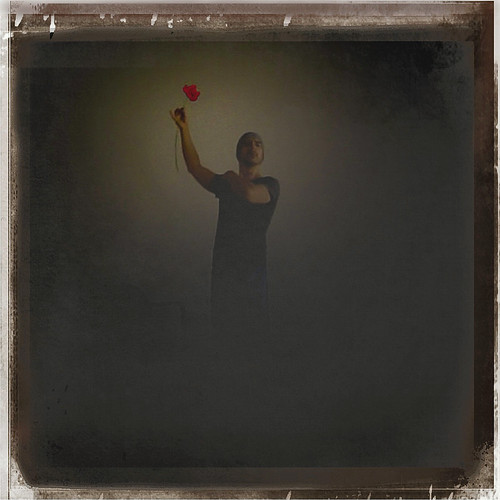
The Rose (From my Butoh vlog) (Digital Work Over Photograph. By Gustavo Thomas. 2012)


The Rose (From My Butoh Vlog) (Digital Work Over Photograph. 2012)
The Rose (From my Butoh vlog)

(Digital Art Over Photograph. By Gustavo Thomas © 2012. All Rights Reserved)


Summer has left me a difficult path in my own work and I haven't had time to edit the videos from my Butoh vlog (and therefore showing them off), but the digital art that surges from them has not stopped.

The flower is an object-subject Kazuo Ohno used to work as part of their own training and as part of his workshops in Yokohama, and his son, Yoshito Ohno, continues to do the same in his own workshops. 

This flower I'm showing here (an artificial rose) was given to me by Yoshito Ohno during a Butoh master class he gave in Montreal dance school last October 2011; the flower is now part of my daily training ... and part of my own art.


Texts, photographs and videos in this Blog are all author's property, except when marked. All rights reserved by Gustavo Thomas. If you have any interest in using any text, photograph or video from this Blog, for commercial use or not, please contact Gustavo Thomas at gustavothomastheatre@gmail.com.


Friday, September 28, 2012

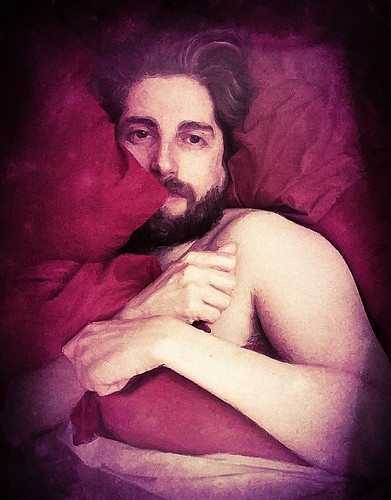
Bearded Man With Red Pillows (Digital Work Over Photograph By Gustavo Thomas. 2012)


Bearded Man With Red Pillows (Digital Work Over Photograph. 2012)
Bearded Man With Red Pillows

(Digital Art Over Photograph. By Gustavo Thomas © 2012. All Rights Reserved)


Texts, photographs and videos in this Blog are all author's property, except when marked. All rights reserved by Gustavo Thomas. If you have any interest in using any text, photograph or video from this Blog, for commercial use or not, please contact Gustavo Thomas at gustavothomastheatre@gmail.com.


Sunday, September 23, 2012

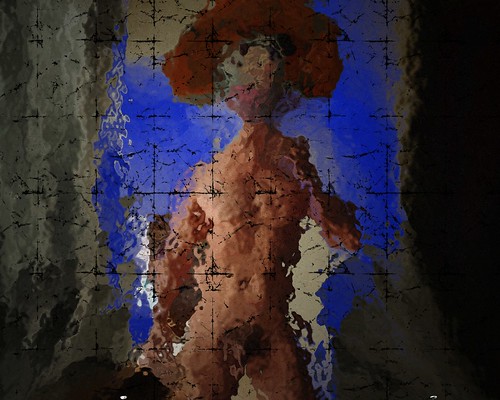
"Body And Cushion" (Digital Art Over Photograph By Gustavo Thomas. 2012)


Body and Cushion (Digital Art Over Photograph. 2012)
Body And Cushion
(Digital Art Over Photograph. By Gustavo Thomas © 2012. All Rights Reserved)


Texts, photographs and videos in this Blog are all author's property, except when marked. All rights reserved by Gustavo Thomas. If you have any interest in using any text, photograph or video from this Blog, for commercial use or not, please contact Gustavo Thomas at gustavothomastheatre@gmail.com.


Saturday, August 25, 2012

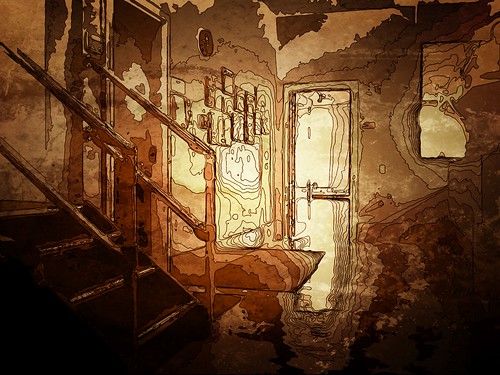
The Hall Of My Studio (Digital Work Over Photograph. 2012)


The Hall Of My Studio (Digital Work Over Photograph. 2012)
The Hall Of My Studio

(Digital Work Over Photograph. By Gustavo Thomas. All Rights Reserved. 2012)


Texts, photographs and videos in this Blog are all author's property, except when marked. All rights reserved by Gustavo Thomas. If you have any interest in using any text, photograph or video from this Blog, for commercial use or not, please contact Gustavo Thomas at gustavothomastheatre@gmail.com.


Sunday, August 19, 2012

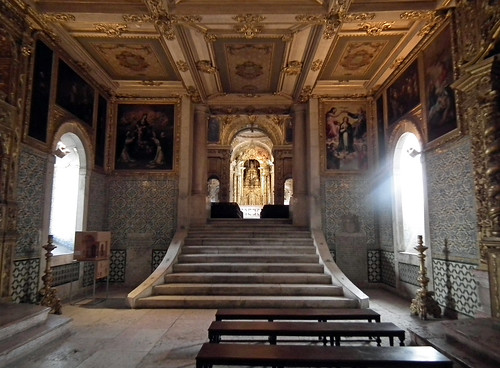
Igreja Madre de Deus at Museu Nacional do Azulejo (Lisbon. 2011)

Igreça Madre de Deus. Museo Nacional do Azulejo (Lisboa. 2011)
Entrance Chapel of Igreja Madre de Deus at Museu Nacional do Azulejo (By Gustavo Thomas. Lisbon. 2011)

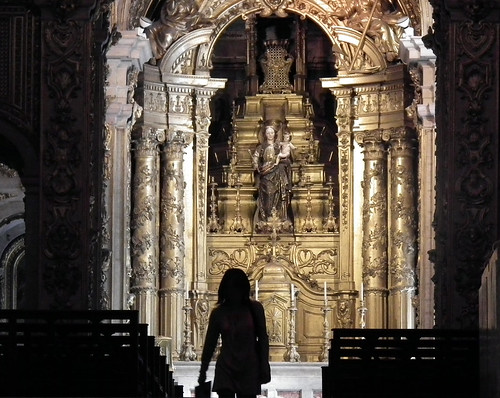
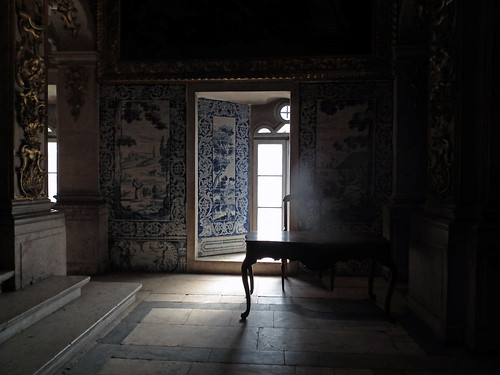
I visited the Mother of God Church (Igreja Madre de Deus) at Museu Nacional do Azulejo in September 2011, during my trip to Lisbon, Potugal. This church is one of the best examples of religious Portuguese Baroque style which combines remarked gold leaves details and wood with magnificent blue tiles (azulejos), and that combination is absolutely spectacular.

I was lucky because almost no visitors were at the church that day, and I could take many photographs isolating some details, but even when one Japanese lady entered to watch, her presence made a very interesting ambiance to my shots. Hope you enjoy the photographs.

Igreça Madre de Deus. Museo Nacional do Azulejo (Lisboa. 2011)
Igreja Madre de Deus at Museu Nacional do Azulejo  (By Gustavo Thomas. Lisbon. 2011)

Igreça Madre de Deus. Museo Nacional do Azulejo (Lisboa. 2011)
Igreja Madre de Deus at Museu Nacional do Azulejo  (By Gustavo Thomas. Lisbon. 2011)


Texts, photographs and videos in this Blog are all author's property, except when marked. All rights reserved by Gustavo Thomas. If you have any interest in using any text, photograph or video from this Blog, for commercial use or not, please contact Gustavo Thomas at gustavothomastheatre@gmail.com.

Monday, August 13, 2012

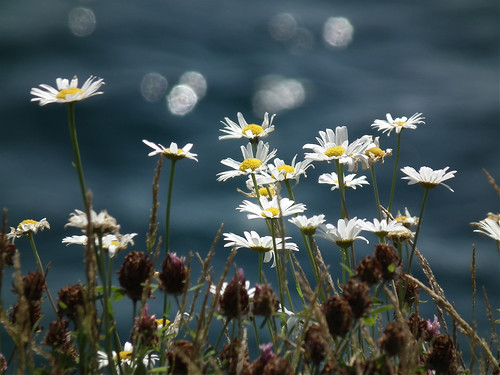
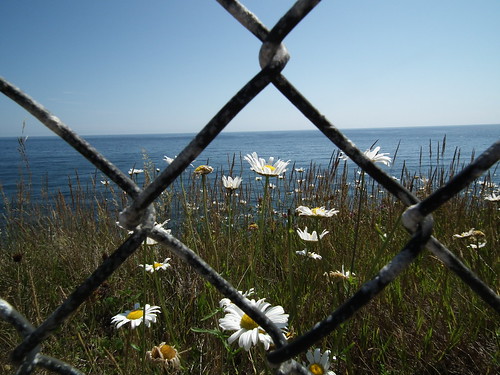
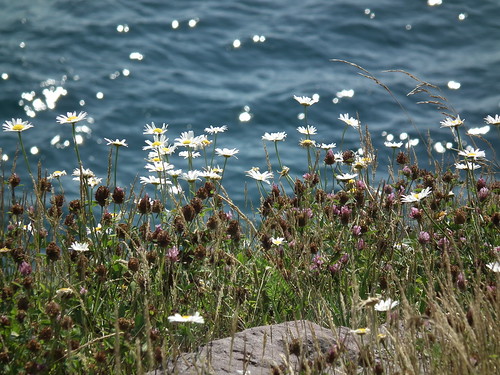
Daisies and the Sea (3 Photographs taken in Newfoundland, Canada. 2012)


Daisies and the Sea (St. John's Newfoundland. 2012)
Daisies and the Sea
(Fort Amherst, St. John's Newfoundland. By Gustavo Thomas. All Rights Reserved. 2012)
Daisies and the Sea (St. John's Newfoundland. 2012)
Daisies and the Sea II
(Fort Amherst, St. John's Newfoundland. By Gustavo Thomas. All Rights Reserved. 2012)
Daisies and the Sea III (St. John's Newfoundland. 2012)
Daisies and the Sea III
(Fort Amherst, St. John's Newfoundland. By Gustavo Thomas. All Rights Reserved. 2012)


Texts, photographs and videos in this Blog are all author's property, except when marked. All rights reserved by Gustavo Thomas. If you have any interest in using any text, photograph or video from this Blog, for commercial use or not, please contact Gustavo Thomas at gustavothomastheatre@gmail.com.

Friday, August 10, 2012

"Maman", a sculpture by Louise Bourgeois at The National Gallery Of Canada (Ottawa. 2012)

Araignée, a sculpture by Louise Bourgeois at The National Gallery Of Canada (Ottawa. 2012)Araignée, a sculpture by Louise Bourgeois and Van Gogh: Up Close. An Exhibition at The National Gallery Of Canada (Ottawa. 2012)Araignée, a sculpture by Louise Bourgeois at The National Gallery Of Canada (Ottawa. 2012)Araignée, a sculpture by Louise Bourgeois at The National Gallery Of Canada (Ottawa. 2012)Araignée, a sculpture by Louise Bourgeois at The National Gallery Of Canada (Ottawa. 2012)Araignée, a sculpture by Louise Bourgeois at The National Gallery Of Canada (Ottawa. 2012)
National Gallery of Canada / Musée de Beaux-Arts du Canada (Ottawa. 2012)


Louise Bourgeois made several of these sculptures during all her life and they are spread all over the world.

The first time I saw one of these monumental sculptures of spiders with its eggs was at the TATE in London in 2007, but it was the end of the day and was very dark, impossible to take any good photograph in that moment; then, in 2008, I saw another one at Ropongi Hills in Tokyo, and this time it was snowing and foggy, the photographs I took resulted totally blurred. This time in Ottawa during my visit to the National Gallery (Musée de Beaux-Arts du Canada) the day was magnificent, sunny and clear, and the sculpture was stunning from any point of view. When I was watching recalled Bourgeois's words about the piece:

"The Spider is an ode to my mother. She was my best friend. Like a spider, my mother was a weaver. My family was in the business of tapestry restoration, and my mother was in charge of the workshop. Like spiders, my mother was very clever. Spiders are friendly presences that eat mosquitoes. We know that mosquitoes spread diseases and are therefore unwanted. So, spiders are helpful and protective, just like my mother." (Louise Bourgeois)

I enjoyed that "Maman" spider enormously and I hope you like the photographs...

Wednesday, October 7, 2009

Gao Brothers's Last Exhibiton and an article from The New York Times by Jimmy Wang.


During my years living in China I didn't see much of Gao Brothers's work (many pieces and photographs were prohibited) but what I saw was enough to be confident about their way to criticize China and its government, I felt really happy with their sarcasm and my mind worked while was seeing their works.

I don't want to talk much about them, the article I'm posting here, from The New York Times, is a very good introduction and show what is most of them, their work. My only comment today is about their age: they are around 52 years old and not anymore members from a young generation; they were sons from a father killed during the Cultural Revolution, and they were Tian'anmen generation heirs... They got a great artistic value, they are politically strong and congruent, but as middle age men they have lost the power to influence others in their country.

My visits to many galleries in Beijing during the last 4 years only showed to me an enormous group of young artists working for money and "craziness"... That could be a Pop Culture characteristic for USA's 50s and 60s but, in 2009 China?

What happens with the new Chinese artist who only criticize "Chinese Pop Culture" while their government is still working as a dictatorial Communist bureaucracy?

Love Gao Brother's work, their sarcasm and critics impossible to see it in any Chinese playwright for example, but that means I'm loving what is not anymore a new way to make Art in China.


New York Times article about Gao Brother's last Exbition in Beijing
(Don't forget to see the video inside the article's page)


Friday, October 24, 2008

Strindberg photographer


Strindberg walked his life researching, he found similitudes and coincidences between matter and energy, he wondered about others' discoveries in fields like psychology, occultism and natural science. August Strindberg, a poet, a scientist, a thaumaturg, ill with an obsessive desire for being recognized as a renovator and a sage; in his obsession he penetrate secrets of many disciplines; he was an erudite but also had terrible mistakes, he was considered by many as pernicious and suffered humiliation; the prototype of a genius, he was only capable of recognizing his own reality and truth.

Walking through his marvelous life he talked about Bohemia, in which he found flowers which seemed images he recognized from his photographic plates; he observed streams of water similar to chemical products he worked with; he perceived above the wind the light from which everything comes from; he intended to penetrate bodies and discover their real interior.


“Je sais très bien que les psychologues ont inventé un vilain nom grec pour définir la tendance à voir des analogies partout, mais cela ne m’effraie guère, car je sais qu’il y a des ressemblances partout, attendu que tout est en tout, partout”. (Inferno) (1)


If we try to understand his genius only through his theatrical career, then we will miss an enormous field of precious information.

Strindberg was also an alchemist who looked for the origins of objects, throughout an internalization process he worked with substances to penetrate any matter and discover its secrets. Strindberg the photographer used photography as a ”medium”, chemical combinations didn’t work, so images, photographic plates, experiments with light, could do the job then. He photographed his face, his rooms, his family, he tried to find the soul in the portrait with a special technique.


“J’ai préparé dans ma tête une histoire qui contient le maximum d’humeurs differentes. Je me raconte l’histoire tout en exposant la plaque et en regardant fixement la victime. sans suspecter ce que la force à faire, sous l’influence de la suggestion, il est obligé de réagir à ces influences qui le pénètrent. Et la plaque fixe l’expression de son visage. Le tout dure exactament trente secondes - mon histoire est minutieusement calculée pour cette durée. En trente secondes j’ai capté le sujet dans sa totalité!” (Quoted by Per Hemmingson)


Strindberg photographed the sky, the clouds, the stars; he used to leave his plates during the night under the effect of the moonlight and the next morning came back to look for changes and tried to explain what he saw there: images of the night, images of what we are not able to see with our eyes, images of the invisible. He subscribed to the crazy idea of extracting part of the soul of others through photography (what other thing could a photographic image be but part of the soul?). He trusted in X Rays as a philosophical way of understanding matter and energy. He detested the delusion of our eyes but he was amazed by them and he used to penetrate that delusion and imagined stories; gelatin plates were a field of illusion, a way of wonders.


“Je suis retourné à mes formations de cristaux que je photographie directement en les copiant de la plaque de verre où la cristallisation se trouve. Ces agrégats, des fleurs de glace, m’ont ouvert des perspectives dans les secrets de la nature qui me stupéfiaient” (Quoted by Per Hemmingson)


My heart always breaks when reading his honest letters, his petitions, his explanations and his furious claims over the incomprehension of others; I have also cried watching his photographs of dark skies and clouds over Stockholm.

As for the soul, when Strindberg discovered psychology, he called it “the unconscious”, and during his long walk of life he bases his research on the supra-natural; having rolled in the sick pleasures of realism and naturalism, his hunger for more pleasure led him to look even deeper or more downward or more inward; later “the others” would call it surrealism: supra-natural was his word.


“C’est donc à moi de jeter la pasarelle entre le naturalisme et le supranaturalisme en proclamant que celui-ci ne constitue qu’un devéloppement de celui’la” (Quoted by Eric Renner)


When he came upon camera theatre where, through actions and words he exposed the world of the soul, of the supra-natural, of the unconscious, the road had been already been traversed by the avatars of exploration; his theatre was and (still is) revolutionary because it came to him as an inevitable result of those failed encounter with alchemy, astronomy, science, philosophy and photography.


“Je cherche la vérité dans la photographie, intensément, comme je la cherche dans beaucoup d’autres domaines.” (Inferno)


Today more than ever I’m fully convinced that to know (and to enjoy even more) Strindberg’s work we have to see and read his “images”.


*

I received, as a birthday gift from someone who loves me, a small book edited in 1994 by Actes Sud, “L’expérience Photographique d’August Strindberg”, written by Clément Chéroux, with a delicious “anexo” including some short extracts from texts written by Strindberg himself about his photographic experience. At the beginning the book seemed to me a little bit conventional, but when I started to read and to feel Strindberg’s powerful experiences with Photography and his research, those words caused real admiration for Chéroux’s work to awake in me.

Now I can understand why, some years later, and after the book was published, The National Stockholm Museum and Le Musée d’Orsay exhibited a large part of Strindberg’s photographic and painting work (2), without any preamble to his literary and theatrical work but as a unique painter and photographer.


(1) I’ve decided not to translate those texts ( some are translations from Swedish to French themselves) because I thought I could make terrible mistakes trying to put Strindberg’s ideas in English (or Spanish). I’m sure there are some versions of this texts in your language.
(2) The exhibition was mainly known thanks to the book that was published about it: “August Strindberg Painter and Photographer”, edited by Yale University and Stockholm Museum.

If you are interested in using any text, image or video from this Blog, please contact the author writing your e-mail and information in comments. (comments are private)
Gustavo Thomas. Get yours at bighugelabs.com