Showing posts with label Wuzhen. Show all posts

Tuesday, February 17, 2009

Chinese Shadow Theatre Exhibition at Denison Museum*.


A few months ago I received an invitation from Anna Cannizzo, curator of Denison Museum, (a museum of Denison University in Ohio, USA), to collaborate with one of my videos displayed on my Youtube channel http://www.youtube.com/teatroesferico. The museum was planning an exhibition to display its collection of Chinese shadows puppet theater and also to talk about how this kind of puppets are handled; they had chosen a video I recorded at a performance by Wei family troupe from Sha'anxi in Dashanzi 798 in Beijing. The video apparently had some problems with the format and they preferred to use other, one so far the most watched of my videos, "A Monkey king fighting", recorded in 2007 in Wuzhen, Zhejiang Province.

The exhibition is called "Between Light and Shadow: Chinese Puppets from the Denison Museum" and the openning on Friday, January 23th, 2009. I share some photograps Ms. Cannizzo kindly sent to me, and of course the two videos showed there.


The text on the panel says:


Contemporary Chinese Shadow Theater The clip you are viewing is an excerpt from video taken by Gustavo Thomas, a researcher of theater arts. The video provides two perspectives of a recent shadow puppet show in Wuzhen xizhan, China. The video is entitled “Monkey King Fighting” and was recorded on March 28th, 2007. According to Thomas the “experience was very interesting: old musicians playing traditional instruments, only one puppeteer (a young woman) with her assistance, and those beautiful puppets of course. It seemed that day they expected hundreds of children so they prepared a simple fight-scene between the Monkey King and other mythological warriors, showing how the Monkey King was able to change himself into anything he wanted and it was a unique opportunity to see how one shadow puppet performance is done facing the stage and behind it, to study it or simply to enjoy this traditional theatrical culture from two different points of view.”


Here those two videos taken in Wuzhen, Zhejiang Province.


* About the Museum and the exhibition follow the link:


Monday, August 13, 2007

Chinese Shadow Puppet Theatre from Sha'anxi.


South Gate Space is a Performance venue in Dashanzi 798, the world famous Avant-gard Art complex in Beijing. It is not a conventional space; small and with little technical features, it’s mainly dedicated to putting on stage spectacles with music and dance groups from remote areas of the country, with only one objective: to preserve the Chinese cultural tradition without caring about their quality or their knowledge about performing arts. This is, from my point of view a “dangerous” philosophy.

I’ve seen some performances at this space and confirmed that only a few of them had knowledge on how to put the spectacle on stage; most of them were folk groups who perform during religious or social festivities in their villages, family singers and musicians, and some, only some, prepared artists. When watching or listening to those groups you, as spectator, change your point of view and try to see these people with pity, you smile and want to say “poor” native artists (most of them were poor farmers indeed) who came to Beijing to be seen by us, people who know what they’re worth. I know what I am saying is very hard but that is what I saw.

In contradiction to my criticism I must accept that thanks to South Gate Space I have seen several folk artists who would be almost impossible to reach from Beijing without traveling far away for hours to find them in their villages. Yes, a contradiction from someone who is trying to observe and criticize.

The show itself had a strange structure, four “scenes” of Shadow Puppet Theatre were combined with short performances by singers and dancers who didn’t have any connection to Sha'anxi province or to Puppet Theatre; our Shadow Theatre Troupe were the “hook” to attract public and to trap it to watch those new groups and singers. I have to say that it was shameful, their work was more a nuisance than anything. It seemed that only their “friends and families” were happy watching them.

About our Shadow Puppet Theatre Troupe, (also called Opera Puppet Troupe because of their use of Song, as any other Opera Theatre in China), I had some mixed opinions.


The troupe was led by 76 year-old Wei Zhenye, and it is said that the Wei family has worked with puppets since the Qing Dynasty. That does not mean a very long time, since the Qing Dynasty ended at the beginning of the 20th century, and the information provided about the family mentioned three generations, so they could have started their job around end of the 19th century or beginning of the 20th. The company has made its own fame through tours all over China and even some overseas ones to Europe; they have also performed in films by known Chinese directors.

Too many photographers inside the space, too many people (many of them walking and chatting) and the difficult structure of the spectacle were a big impediment for getting good material to show, but nevertheless I can offer to you three videos:

The first video shows how the Wei family prepared their puppets before the performance.


The two follow videos shows scenes of fighting and; it’s bizarre because of its large moments without movement, but when there was movement we could enjoy a good puppet performing technique.
Video: Beheading enemies


Video: scene of battle and death


The third video shows one “scene of love and singing”, almost without movement but with Opera singing. It was nice to listen to it but it is difficult to write about my appreciation for it, as it was sung in the Shaanxi dialect and it was impossible to understand any words of the songs.

Video: Scene of singing and love.


The Shadow Puppet Theatre performance was enjoyable, yes, and now I can add one more experience in my search for Chinese traditional performing arts, but it also pushed me to remember and even to see the videos of other performances I’ve already seen: the one in Wuzhen, the one in Siem Reap in Cambodia, or the 20 yuan-private performance I had in Xi’an (1) and, given my impossibility to criticize because of my poor knowledge about it, I must accept that the Wuzhen performance is the most memorable of them all.


(1) It is a pity I lost the material recorded in Xi’an.

Monday, May 7, 2007

Wuzhen (II): A Chinese Shadow Puppet experience


Wuzhen Dongzha has a special spectacle, a Shadow Puppet Theatre. The small company works with traditional chinese stories, music and technique to handle puppets, and of course traditional Shadow puppets made from leather. Even though the performances are mostly shorter than usual, it’s enough to ensure their enjoyment.

That day of March I went to Dongzha, the village was pretty packed with hundreds of children from nearby schools (and of course tourists), so you can imagine how I felt when I tried to get in the small theatre. It was so crowded that I prefered to wait for the next performance, then an employee told me I could see the performance from behind the stage if I wanted, and of course I did and I recorded the whole 5-minute play back stage.

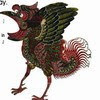
The experience was very interesting: old musicians playing traditional instruments, only one puppeteer (a young woman) with her assistance, and those beautiful puppets of course. It seemed that day they expected hundreds of children so they prepared a simple fight-scene between the Monkey King and other mythological warriors, showing how the Monkey King was able to change himself into anyhting he wanted.


After watching from behind the stage, I could watch the performance as any other spectator, and of course I recorded the whole play as well.


The wonderful experience aside, I think it was a unique opportunity to see how one Shadow Puppet performance is done facing the stage and behind it, to study it or simply to enjoy this traditional theatrical culture from two different points of view.

Wednesday, May 2, 2007

Wuzhen (I): Two Chinese Opera Theatres in one beautiful water town.


Wuzhen is a fantastic small town, just a two-hour trip by bus from Shanghai. It's part of the so called "Water Towns",built between canals and small rivers, and very similar to Venice but without the urban structure that has made a success of the Italian City. All these water towns keep a traditional Qing architecture, but their charm is marred by the masses of tourists (mostly Chinese) going there and the consequences of these visits reflected on the dirty water and the bad conditions of the buildings. Zhouzhuang is the most famous of all of them, but we didn't visit it as we were trying to avoid the masses and pollution, and so we decided to go to this one, a little bit farther away and smaller, called Wuzhen(1). It was a fortunate decision, Wuzhen was full of surprises for us.

Wuzhen is divided in two parts of touristic interest: Xizha (West Wuzhen) and Dongzha (East Wuzhen). Xizha has a special charm, it has just been rebuilt and converted in a huge resort; the whole place is closed during the night and only hotel guests are able to enjoy its charm from 5 pm till next day.

Wuzhen Xizha Theatre


Halfway through the long and narrow main street of Wuzhen, a big gate with a sign marks the entrance to the theatre, then, further inside, a nice stone square opens to us, and at the end a simple building, inside of which is the hall of the theatre; a few steps more and we discover, facing us, one fantastic wooden structure, magnifiscent but simple, decorated but not excessively like other theatres (beautiful, of course) we find in Beijing.

There is no information about this Chinese province’s jewel, nor signs, nor brochures, nor guides who know something about the place, no books either or any Internet site talking about it; even so, the theatre speaks for itself. Because of the conditions of Xizha, just rebuilt and no masses of people walking everywhere any day, there are no regular performances, so there was no hope of seeing anything on stage those three days I stayed there.

At the time I visited (March 26th, 2007), the theatre had been open for just one month; many details could be seen without problem, while in other theatres they have been almost erased by time. There is a big open area in the middle, just for the public, with no roof, though three sections around it are spectator zones similar to "box seats" in western theatres; the wood had been recently varnished, and there were many carvings about Chinese Opera scenes, Buddhist and Taoist passages or simple fortune animals; I have to accept that even the golden carved figures were in good balance with the whole.

The Theatre, following a good practice usual in China's performing spaces, has a small museum where many costumes are in exhibition. As I mentioned before, there is no information about what is exhibited.

I visited the place twice, on different days, and because of that you see some part of the video with a raining ambiance and the other part with a sunny day.


The Small Theatre in Wuzhen Dongzha


Xizha is pretty much more comfortable and nice for any touristicinterest, however it doesn't have the life Donzha has. With a very nice (but also in a bad condition) traditional area ,Dongzha is situated in the middle of the current city, populated, polluted and noisy like any other Chinese town. This is the most visited area with dozens of restaurants, souvenir shops and public buildings which are packed full of people. Such movement brings on much entertainment offers: museums, a colourful temple and two theatres with performances all day long. One of these theatres is for Shadow Puppet performances (I will have a special post for it), and the other one is what we’ll talk about here, the small Chinese Opera Theatre.

This is not a theatre itself, we could say it is an open air stage. In one part of the central square, surrounded by the temple, commercial and public buildings and next to the main canal, there is a small stage decorated as many Qing Dynasty Opera theatres(2). Small, but big enough to have two floors with make up rooms and one stage of about 4 x 6 meters. What’s remarkable is its roof, with some Chinese mythological wood sculptures and drama characters.

I didn't have the chance to see anything there, the performance schedules were the same in both theatres, and I preferred to see the Shadow Puppets (3). I didn't regret it and you'll see why when I post about my experience later.


(1) Not to visit Zhouzhuang had risks of course. First of all, I missed the best of traditional Water Town architecture in the region.
(2) I'm not a scholar and I can make mistakes. In my point of view this small theatre is similar (in different scale, of course) to those in the Summer Palace and The Forbidden City in Beijing, Qing Dinasty’s best examples.
(3) I had the intention to record that shadow puppet performance; there was the chance to record the same performance facing the stage and from behind the stage.


If you are interested in using any text, image or video from this Blog, please contact the author writing your e-mail and information in comments. (comments are private)
Gustavo Thomas. Get yours at bighugelabs.com