Showing posts with label Dance. Show all posts

Thursday, May 9, 2013

To Mount Fuji. A Butoh improvisation at Kamakura beach (2013)


To Mount Fuji. A Butoh improvisation at Kamakura beach (Gustavo Thomas © 2013)


I was just going for a walk on Kamakura beach; some colleagues at Kazuo Ohno dance Studio told me that it was nice to come to Kamakura and just walk on the beach instead of going to the temples which is what the city is known, as I'd already visited most of its dozens temples I decided to take the advice and have that walk.

I didn't expect to see Mount Fuji from there, never!

And it's not always like that, Mount Fuji is a shy guy, usually is not visible and hides himself behind clouds or the brilliant sunlight, today it seemed something special was happening over there.

My excitement at the moment to see that Japanese icon appearing behind the mountains -and in a so clear way- was so big that I stopped my walk, immediately set my camera on the tripod and started to move in his honour, with my Butoh dedicated to him.

Here you have some of the still images from the video I recorded, just sharing what I consider some of the best moments of that "dance".


, 
To Mount Fuji. A Butoh improvisation at Kamakura beach (Gustavo Thomas © 2013)

To Mount Fuji. A Butoh improvisation at Kamakura beach (Gustavo Thomas © 2013)

To Mount Fuji. A Butoh improvisation at Kamakura beach (Gustavo Thomas © 2013)

To Mount Fuji. A Butoh improvisation at Kamakura beach (Gustavo Thomas © 2013)

To Mount Fuji. A Butoh improvisation at Kamakura beach (Gustavo Thomas © 2013)

To Mount Fuji. A Butoh improvisation at Kamakura beach (Gustavo Thomas © 2013)

To Mount Fuji. A Butoh improvisation at Kamakura beach (Gustavo Thomas © 2013)

To Mount Fuji. A Butoh improvisation at Kamakura beach (Gustavo Thomas © 2013)

To Mount Fuji. A Butoh improvisation at Kamakura beach (Gustavo Thomas © 2013)


Texts, photographs and videos in this Blog are all author's property, except when marked. All rights reserved by Gustavo Thomas. If you have any interest in using any text, photograph or video from this Blog, for commercial use or not, please contact Gustavo Thomas at gustavothomastheatre@gmail.com.


Wednesday, January 30, 2013

Long Shadows (A video from my Buton Vlog. Gustavo Thomas © 2012)


Long Shadows (Photograph from my Buton Vlog. Gustavo Thomas © 2012)


Long Shadows (Photograph from my Buton Vlog. Gustavo Thomas © 2012)

After some weeks I'm back in this Blog (where I expose my life and my theatre). As a first step I'm retaking the publication of videos from my Butoh Vlog. So many travels, parties and work (I must say it, with pleasure), had put on hold these videos and other articles I wanted to publish here.

I'm still thinking about the importance of publicly posting these documents of my daily training improvisations; I've received a very good opinion from those who have seen them and I appreciate it a lot.
As it's common in every post I clarify...:

This is part of my daily morning training, and nothing else. 
After walking and working with some postures and inner images, a short choreography emerges, that's what you see in this Butoh vlog.
The music you are listening in the video wasn't that I was working with during my training, it was added later during the edition.


Long Shadows (A video from my Buton Vlog. Gustavo Thomas © 2012)

More photographs extracted from the video:
Long Shadows (Photograph from my Buton Vlog. Gustavo Thomas © 2012)

Long Shadows (Photograph from my Buton Vlog. Gustavo Thomas © 2012)

Long Shadows (Photograph from my Buton Vlog. Gustavo Thomas © 2012)

Long Shadows (Photograph from my Buton Vlog. Gustavo Thomas © 2012)


Texts, photographs and videos in this Blog are all author's property, except when marked. All rights reserved by Gustavo Thomas. If you have any interest in using any text, photograph or video from this Blog, for commercial use or not, please contact Gustavo Thomas at gustavothomastheatre@gmail.com.

Thursday, December 27, 2012

Das Lied Ist Aus (A video from my Butoh Vlog)


Das Lied Ist Aus (Butoh Vlog. Gustavo Thomas © 2012)


This is part of my daily morning training, and nothing else. 
After walking and working with some postures and inner images, a short choreography emerges, that's what you see in this Butoh vlog.
The music you are listening in the video wasn't that I was working with during my training, it was added later during the edition.


Video:

Das Lied Ist Aus (Butoh Vlog. Oct 2nd, 2012) from Gustavo Thomas on Vimeo.


Texts, photographs and videos in this Blog are all author's property, except when marked. All rights reserved by Gustavo Thomas. If you have any interest in using any text, photograph or video from this Blog, for commercial use or not, please contact Gustavo Thomas at gustavothomastheatre@gmail.com.


Saturday, December 15, 2012

Greensleeves (Video from my Butoh Vlog. Gustavo Thomas. 2012)


Greensleeves (Gustavo Thomas © 2012)


This is part of my daily morning training, and nothing else. 
After walking and working with some postures and inner images, a short choreography emerges, that's what you see in this Butoh vlog.
The music you are listening in the video wasn't that I was working with during my training, it was added later during the edition.


Texts, photographs and videos in this Blog are all author's property, except when marked. All rights reserved by Gustavo Thomas. If you have any interest in using any text, photograph or video from this Blog, for commercial use or not, please contact Gustavo Thomas at gustavothomastheatre@gmail.com.

Saturday, December 8, 2012

Youthful Illusions (Video from my Butoh Vlog. Gustavo Thomas. 2012)


Youthful Illusions (A video from my Butoh Vlog. Gustavo Thomas © 2012)

This is part of my daily morning training, and nothing else. 
After walking and working with some postures and inner images, a short choreography emerges, that's what you see in this Butoh vlog.
The music you are listening in the video wasn't that I was working with during my training, it was added later during the edition.

Youthful Illusions (vals)

If you want to see other videos form my Butoh vlog you can go to the link: "Gustavo Thomas Butoh Vlog" on the upper part of this page

Texts, photographs and videos in this Blog are all author's property, except when marked. All rights reserved by Gustavo Thomas. If you have any interest in using any text, photograph or video from this Blog, for commercial use or not, please contact Gustavo Thomas at gustavothomastheatre@gmail.com.

Thursday, November 15, 2012

Death Of A Quiet Poet (Video From My Butoh Vlog. Gustavo Thomas. 2012)


Buto Vlog (June 13, 2012) Death Of A Quiet Poet
Death Of A Quiet Poet (Gustavo Thomas © 2012)


This is part of my Butoh Vlog, part of my daily morning training, and nothing else.

After walking and working with some postures and inner images as a warm up (and always with music), a short choreography emerges, that's what you see in this Butoh vlog.

The music you are listening to in the video is not what I was listening to during the exercise, it was added later.


Texts, photographs and videos in this Blog are all author's property, except when marked. All rights reserved by Gustavo Thomas. If you have any interest in using any text, photograph or video from this Blog, for commercial use or not, please contact Gustavo Thomas at gustavothomastheatre@gmail.com.

Sunday, November 11, 2012

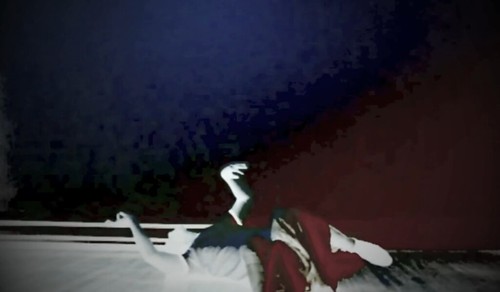
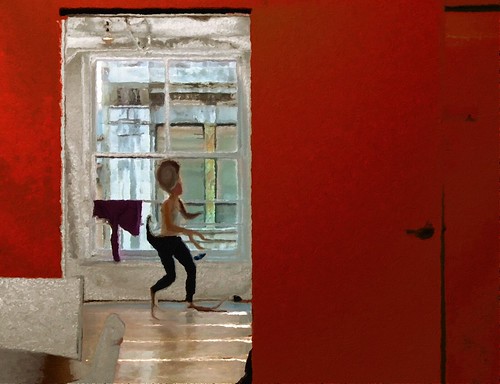
L'esprit de la danse à Montréal / The Spirit of the Dance in Montreal (Digital Work Over Photography By Gustavo Thomas. 2012)


L'esprit de la danse à Montréal / El espíritu de la danza en Montreal (Digital Work Over Photography. 2012)
L'esprit de la danse à Montréal / The Spirit of the Dance in Montreal

(Digital Work Over Photography. By Gustavo Thomas © 2012. All Rights Reserved)


Texts, photographs and videos in this Blog are all author's property, except when marked. All rights reserved by Gustavo Thomas. If you have any interest in using any text, photograph or video from this Blog, for commercial use or not, please contact Gustavo Thomas at gustavothomastheatre@gmail.com.

Thursday, November 8, 2012

Don't Want To Look Guilty (A Video From My Butoh Vlog. 2012)


"Don't Want To Look Guilty"

 This is part of my daily morning training, and nothing else. After walking and working with some postures and inner images, a short choreography emerges, that's what you see in this Butoh vlog.


Texts, photographs and videos in this Blog are all author's property, except when marked. All rights reserved by Gustavo Thomas. If you have any interest in using any text, photograph or video from this Blog, for commercial use or not, please contact Gustavo Thomas at gustavothomastheatre@gmail.com.

Monday, October 8, 2012

"A short memory" (Video from my Butoh vlog. 2012)


"A short memory" (From my Butoh vlog) (Gustavo Thomas © 2012)


This is part of my daily morning training, and nothing else. After walking and working with some postures and inner images, a short choreography emerges, that's what you see in this Butoh vlog.

The music you hear is not what I was listened to when I was in the training, it was added later.
 

Texts, photographs and videos in this Blog are all author's property, except when marked. All rights reserved by Gustavo Thomas. If you have any interest in using any text, photograph or video from this Blog, for commercial use or not, please contact Gustavo Thomas at gustavothomastheatre@gmail.com.

Sunday, August 26, 2012

Bugaku (舞楽) Dance Performance at Meiji Shrine, Tokyo (2011)

Bugaku Dance Performance at Meiji Shrine (2011)
Bugaku (舞楽) Dance Ritual performance at Meiji Shrine, Tokyo (Por Gustavo Thomas. 2011)

In May 2011 I had the opportunity to see live a Bugaku 舞楽 dance ritual performance at one of the most beautiful temples of Japan, the Meiji Shrine, in Tokio. 

Bugaku is a group of court dances with more than 1200 years of age and it was till the 1950's of the last century that those dances were hidden from the general public.

Obviously I'm not a connoisseur but it seems that what I saw that day was a very standard version of these dances: very slow, smooth and rhythmic movements with a royal attitude performed by a group of dancers wearing Buddhist clothes (even when the Meiji shrine, in this case, is a Shinto temple).

The act of dancing is very short; the music and the musicians have a very important role; and the preparation and the exit of the dancers occupies most of the time of the performance itself (that's a very common characteristic of Japanese ritual performing arts).

In my point of view (very ignorant in anything about Japanese ritual dances) what's remains in the memory of everyone is the visual beauty of the spectacle with such a formidable set around.


Bugaku Dance Performance at Meiji Shrine (2011)
Bugaku (舞楽) Dance Ritual performance at Meiji Shrine, Tokyo (Por Gustavo Thomas. 2011)

Bugaku Dance Performance at Meiji Shrine (2011)
Bugaku (舞楽) Dance Ritual performance at Meiji Shrine, Tokyo (Por Gustavo Thomas. 2011)

Bugaku Dance Performance at Meiji Shrine (2011)
Bugaku (舞楽) Dance Ritual performance at Meiji Shrine, Tokyo (Por Gustavo Thomas. 2011)


You can see in other post of this Blog, about my first visit to Tokyo in 2008, some ancient documents from the National Museum depicting Bugaku dancers: http://gustavothomastheatre.blogspot.ca/2010/03/ancient-scroll-images-of-bugaku.html


Texts, photographs and videos in this Blog are all author's property, except when marked. All rights reserved by Gustavo Thomas. If you have any interest in using any text, photograph or video from this Blog, for commercial use or not, please contact Gustavo Thomas at gustavothomastheatre@gmail.com.


Tuesday, January 3, 2012

In Between, Butoh and Dance Performance by Yoshito Ohno and Lucie Grégoire at L'Agora de la Danse, Montréal. (2011)

In Between, A Performance By Yoshito Ohno (大野庆人) and Lucie Grégoire at L'Agora de la Danse (Montreal. 2011)
In Between, by Yoshito Ohno and Lucie Grégoire (Montreal. 2011)

I was very excited about watching Yoshito Ohno for first time live on stage (at L‘Agora de la danse); my only experience had been through videos and inside his father’s studio (the Kazuo Ohno Dance Studio), but he was only teaching and sometimes performing minimal chains of movements. Wednesday November 16th 2011 was the day to see him performing in a real production.

In Between is a project, a part of a trilogy (the second part) that Yoshito Ohno has been working with Lucie Grégoire since 2008. Lucie works mainly with modern dance techniques, but she’s been very close to Butoh and also works with it. Master Ohno follows his father's (Kazuo Ohno) teachings as well as his rich experience working (at various times) with Tatsumi Hijikata from the 1950’s till 1970’s; he is a real heir of those Butoh creators.

Lucie Grégoire and Yoshito Ohno performed In Between with several solos and duos, little by little mixing their personalities and techniques. My interest was, obviously, in observing all of Ohno’s movements, but Grégoire was so powerful and the whole piece of such great unity that it was impossible not see both works.

In Between is the encounter of two cultures of body movement, Butoh and Modern Dance, but also the encounter of two artistic personalities. None of them left aside their personal background, style of movement or ways of seeing their own performing art, but their encounter is successful, it reaches a union of a very high quality.

Yoshito Ohno's style of Butoh is simple, clear, we could see and differentiate each action in his work; his movement was so concrete that we could keep our attention on his eyes, his hands or his legs without missing other parts; he knows very well how to direct our attention. His hands were specially strange and beautiful, with almost no movement in them but always charged with energy. We feel him trembling and we never stop watching him.

There were two types of music, two epochs (actually several), and their images gently exploded in front of us. I cannot forget the movements of Grégoire’s back and arms, as well that infant dressed like a rabbit (or a rabbit itself) Yoshito offered to us.

One to one the solos became duos and their physical speech resulted comprehensive and simple: it doesn’t matter what exactly they were talking about, we observed their music, their past, their dreams, we could see their own relatives on stage.

In Between, A Performance By Yoshito Ohno (大野庆人) and Lucie Grégoire at L'Agora de la Danse (Montreal. 2011)
Yoshito Ohno and Lucie Grégoire. In Between. (Montreal. 2011)

Like a ritual, they looked for their ancestors, for their own ghosts. And what we see at the final scene, two charming ghosts coming from the past in a lovely union, is one of the most beautiful and simple images anyone could ever see on stage.

We were pleased and we were happy at the end of In Between.


Texts, photographs and videos in this Blog are all author's property, except when marked. All rights reserved by Gustavo Thomas. If you have any interest in using any text, photograph or video from this Blog, for commercial use or not, please contact Gustavo Thomas at gustavothomastheatre@gmail.com.

Wednesday, December 7, 2011

Min Tanaka's The Rite of Spring at L'Ópera Comique(1987)


Min Tanaka


Some discoveries are worth sharing immediately, and it is what I'm doing now with this video of a 1987 Min Tanaka's production at L'Ópera Comique, The Rite of Spring.

I knew a little about Tanaka's work thanks to Jocelyne Montpetit, the Butoh dancer; she met him during the 80's in Japan and even worked in his company. Last November during the workshop I took with her in Montreal she told me about someone who has posted The Rite of Spring in Youtube, and that could be a very good example of Tanaka's work if I wanted to understand the words she transmitted about him.

For some stupid reasons I forgot the tip and it was till today that I accidentally came to that Youtube link. Of course I cannot talk more about Min Tanaka's work, but you must know that he's considered one of the most important heirs of Tatsumi Hijikata, the founder of Butoh, but also a very important dancer and choreographer independently of his relation with Butoh.

The Rite of Spring was staged one year after Hijikata's death, and was considered totally a Butoh production (at least by Westerner's eyes), that style of Butoh coming from Hijikata's branch, the dance of darkness o Ankoku Butoh. Other thing was coming at the same time with Kazuo Ohno and his Butoh of light, as some have called Ohno's Butoh.

Please enjoy this whole recording of The Rite of Spring directed by Min Tanaka in 1987:

 The Rite of Spring part 1/7

 The Rite of Spring part 2/7

 The Rite of Spring part 3/7
The Rite of Spring part 4/7

 The Rite of Spring part 5/7
 The Rite of Spring part 6/7

 The Rite of Spring part 7/7


Texts, photographs and videos in this Blog are all author's property, except when marked. All rights reserved by Gustavo Thomas. If you have any interest in using any text, photograph or video from this Blog, for commercial use or not, please contact Gustavo Thomas at gustavothomastheatre@gmail.com.


Saturday, September 17, 2011

Casta Diva (From my Butoh Vlog)

Gustavo Thomas Butoh Vlog (Sept 13, 2011) "Casta Diva"


I have to accept that I enjoy a lot this idea of moving during my Butoh training wearing anything that makes unrecognizable my "persona".

In my last Butoh Vlog post I worked wearing a wig, a woman mask and using a bed cover. The inner images were still there, of course (that's actually the job), but that play with objects provoked a change of style influencing my movement and of course the result in video. 

As usal, the music I was listening to during my training was not what you're listening to in this video vlog (I mean Casta Diva sung by Callas); I erased the first sound and then add the new piece when I feel this matchs with what I was seeing there. The final edition is unexpected, yes, but very satisfying.

I'm sharing some screen photographs (from the video, of course) and the video itself. You can find all posts of my Butoh Vlog in this page:  http://gustavothomasbutohvlog.tumblr.com/


Butoh Vlog (Sept 13, 2011): Casta Diva from Gustavo Thomas on Vimeo.
Butoh Vlog (Sept 13, 2011): Casta Diva

Slideshow in Flickr:


Texts, photographs and videos in this Blog are all author's property, except when marked. All rights reserved by Gustavo Thomas. If you have any interest in using any text, photograph or video from this Blog, for commercial use or not, please contact Gustavo Thomas at gustavothomastheatre@gmail.com.

Monday, August 8, 2011

Faces and Hands in my Butoh Vlog


Gustavo Thomas Butoh Vlog: Faces


As some of you may know I'm working in a personal project around my Butoh daily training, a Butoh Vlog, where I'm video-recording one small choreography which "emerges" from that training; every time a different choreography and every time an amazing experience (in my point of view, of course).

That Vlog got its own site (in tumblr: http://gustavothomasbutohvlog.tumblr.com/ or here in Blogger with a special page for it: http://gustavothomastheatre.blogspot.com/p/gustavo-thomas-butoh-vlog.html).

Many interesting things have happened in that project and today I'd like to share something I consider remarkable, the visual possibilities Butoh offers to me. After many days working and recording choreographies with my whole body in movement, I decided to work only with body parts, first with hands (and arms) and after with my face (and head). The result as I say was remarkable, I liked too much and I can assure there is a lot of new possibilities for a creative work, specially in the field of visual arts.

I won't talk more about it, it'll be better to show it and you'll watch by yourselves. I'm publishing some photographs extracted from the video with my face with some photoshop effects, and after that the two videos, with arms-hands and with head-face, both with a special effect as well.


Gustavo Thomas Butoh Vlog for July 29, 2011: Two Hands / Dos Manos from Gustavo Thomas on Vimeo.


Texts, photographs and videos in this Blog are all author's property, except when marked. All rights reserved by Gustavo Thomas. If you have any interest in using any text, photograph or video from this Blog, for commercial use or not, please contact Gustavo Thomas at gustavothomastheatre@gmail.com.


Tuesday, July 26, 2011

Sanghyang Djaran (Trance Dance) Performance at Pura Dalem Taman Kaja, Bali.

Sanghyang Djaran (Horse Trance Dance). Ubud, Bali. (By Gustavo Thomas. 2009)

"The word Sanghyang means celestial and refers to trance dance rituals whereby the performers enter an altered state of consciousness called kerawuhan (descent or arrival) or nadi (becoming).  ...  The purpose is to restore order back to the village and to exorcise spirits of chaos." (1)

After reading the last quotation you can suppose that in these days trance dances are rare in Bali (and elsewhere in the world).

What I saw in Ubud after the Kecak performance at Pura Dalem Taman Kaja, the Sanghyang Djaran (or horse trance dance), in July 2009, was a performance for tourists; yes, the dancer was "acting" the trance. For us, ignorants about Balinese rituals, there is almost no difference, but for those who know and appreciate Balinese rituals there are.

So, what's the point of publishing here? Simple: this is a Blog about theatre and performing arts, and I'm sure, this "trance dance for tourists" I saw that evening in Ubud was both of them.

Even though there wasn't a real trance it was a very a good "external" example of it and, indeed, a very interesting one, specially in visual terms. Usually in these kind of works with religious origin Balinese performing artists keep the general and basic structure of the original ritual, and we can see example of it all over Bali.

So, from my point of view, this video is worth to watch, but mostly I think this is another good opportunity to see for first time and enjoy one more of those fantastic and special Balinese performing arts.

Video: Sanghyang Djaran (Horse Trance Dance). Ubud, Bali. (By Gustavo Thomas. 2009)

Sanghyang Djaran, A Balinese Trance Dance Performance at Pura Dalem Taman Kaja, Bali (2009) from Gustavo Thomas on Vimeo.
Sanghyang Djaran, A Balinese Trance Dance Performance at Pura Dalem Taman Kaja, Bali (2009)


(1) Balinese Dance, Drama and Music. A Guide to the Performing Arts of Bali. I Wayan Dibia and Rucina Ballinger. Perilus. Singapore, 2004.

Texts, photographs and videos in this Blog are all author's property, except when marked. All rights reserved by Gustavo Thomas. If you have any interest in using any text, photograph or video from this Blog, for commercial use or not, please contact Gustavo Thomas at gustavothomastheatre@gmail.com.

Sunday, July 17, 2011

“If you feel that the flower is beautiful, then you are beautiful.” (Learning Butoh with Yoshito Ohno)

(Translated by Tadeo Berjon)


Being a flower. Yoshito Ohno studio. (By Gustavo Thomas. Yokohama 2011.)

Yoshito tells us that Hijikata used to say: “Your body possesses everything within, you just have to find it” and he would add that the way in which Kazuo Ohno and Hijikata did that was through Butoh.  Moving every day, each moment of their lives, every moment of doubt, of inspiration, of relaxation, of crisis; moving every moment of discipline and work, of dreaming, of pain, of remembrance.  And it’s true, that attitude is completely logical:  else, how could we find the all within our bodies if we don’t immerse ourselves totally in it, rummaging in every detail of our unknown interior?
The search is done initially by walking, and the slow pace would seem a premise.  In our slow walking we discover that the experience is risky too:  if our body contains all, then, besides life and prayer and love, it also contains death itself and its ghosts, that which others suffer and others ask themselves, violence and grudges, fears and anguish, mental labyrinths and hells... everything.
In those games of the logic of being congruent with our Butoh, Yoshito adds other words from Hijikata:  “the dead body always walks risking life.”
Nothing in the studio of master Ohno is compulsory; a proposal for movement is not an order, nobody is forced to search for their hates, their fears or their violence; everything is simple, soft; something is commented, something is told, something is proposed, and then we must move.  The risk appears because it finds you when you move, like a sunlight or a mother that cradles her baby. 
So, while moving in that search of the all within, I could write at the end of my second session:  “I’ve just arrived from my work with Yoshito Ohno.  Today, dancing, I was a three-day flower, a blossoming peach tree that died in the wind, a prayer, and a child’s heart.”
Our body contains everything and can transform itself into anything.  The proposal was always “be”, “you are...”
“If you feel that the flower is beautiful, then you are beautiful” would tell us Kazuo Ohno through the voice of his son,  Yoshito.
Tens of photos, both of Kazuo Ohno and of Tatsumi Hijikata, show them “being” that which they imagined while moving.  I remember them and learn too.
Hijikata being earth. Photo by Eikoh Hosoe. (book Kamaitachi)

Kazuo Ohno, a pond. Book cover of Hidden Body, The World of Kazuo Ohno.


And in that studio, for various sessions, we were dozens of flowers, under different circumstances and conditions; we were silk, and with it we learned the softness and strength of our bodies, by being the characteristics of silk, by touching silk, we discovered in movement the characteristics of our bodies; and we were bamboo too, and with bamboo in our hands, we explored the strength of our exterior and the emptiness of our interior, the hollowness of our physicality.


Silk. Yoshito Ohno studio. (Photo by Gustavo Thomas. Yokohama, 2011)
We were all if we found it in movement.  There are no fixed structures but each session some patterns repeated themselves:  Yoshito talks, shows, demonstrates, exposes, asks us to move based on that, we always do it with music, after some 5 minutes he stops, continues talking about the same subject or changes to a new one.  And so for two hours every session.  At the end, some tea and snacks while we talked about the petty details of life.
How happy I was because I was never judged on whether I really was the flower, silk, bamboo, the sea or the wave!  That’s right, I was never judged, nor were the others: we were invited to be and to move while being, and just that.
Looking at pictures of Rodin’s sculptures we learnt that he, like Butoh, was revolutionary because they didn’t imitate the movement of the body, but were simply the body that was expressed in itself, it was a kiss or a hug or a pride.  We learnt that impressionist painters, like Butoh, were revolutionary because they offered life from other angles, and that those impressionists got their inspiration to discover those angles from Hokusai and, in particular, his piece “The Wave.”
And then we moved being water, being the sea, being waves, being the force of gravity, the moon itself, and the wave again.  We were, in the line of the water (and not always in the same session), the feminine and the moon; we danced to a piece by Chopin, we remembered the mother, the bosom of the mother; we lived the night and retook the sea.
With a piece of cloth we discovered the intensity of our interior:  by stretching it or squeezing it the intensity was bigger; by relaxing its stretching our interior diminished its intensity.  We played with emotions without knowing which ones they were; it was my mind that associated to some, to my past, to my inventions, to my hidden desires, it responded to what the cloth itself was, my body in contact with the force applied to that piece of cloth. 

Working at Yoshito Ohno Workshop. (By Gustavo Thomas. Yokohama, 2011)


Yoshito tells us about the “remnants of emotion”, that which remains after squeezing the cloth of our emotions, that which remains and weighs and drags within.  While he commented he moved, his walking was slow, tense, heavy.  He talked about the difficulty of expressing those remnants on stage, of the so called “forte pianissimo” and he also moved with great intensity but in an extremely soft way: - “forte pianissimo” - he repeated while moving, and invited us to try.  “This is a challenge to face, every day” - he would explain.  Kazuo Ohno was a master of that “forte pianissimo”.
In the line of emotions we made them body and voice:  on a single occasion (and explaining that he did it specially because I was an actor), he asked me to say a sentence on the heaviness of life, in my language, and to say it while walking.  We were all charged with the search for the forte pianissimo.  Then he asked one of the participants to climb on my back and let his weigh drop on me; I was supposed to continue repeating the sentence during all my walking. That night we didn’t talk more.
I felt the flower was beautiful, then I was beautiful...
Yes, that night we didn’t talk more; but some other days we sang...


Texts, photographs and videos in this Blog are all author's property, except when marked. All rights reserved by Gustavo Thomas. If you have any interest in using any text, photograph or video from this Blog, for commercial use or not, please contact Gustavo Thomas at gustavothomastheatre@gmail.com.


If you are interested in using any text, image or video from this Blog, please contact the author writing your e-mail and information in comments. (comments are private)

Gustavo Thomas. Get yours at bighugelabs.com