Showing posts with label USA. Show all posts

Monday, September 17, 2012

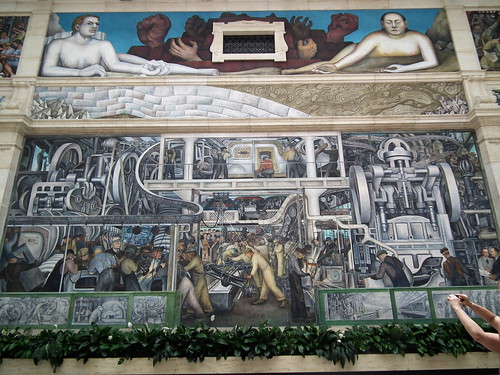
"Detroit Industry", A Diego Rivera's Fresco at the Detroit Institute of Arts (2012)

Diego Rivera's mural "Detroit Industry" at Detroit Institute of Arts (Detroit. 2012)
"Detroit Industry" A Diego Rivera's fresco at the Detroit Institute of Arts (Gustavo Thomas © 2012)

To look at any of the Mexican masters of art in museums and exhibitions abroad is not only very interesting but it also makes one very proud. The history of the Detroit Institute of Arts and Diego Rivera (as well as the fashion of wondering what Frida Kahlo was doing at that same time) is already part of the mythology of the history of art in Mexico, and possibly in the world. Although Detroit is currently not the best place to visit in the United States (the city is mired in an economic crisis that has left it half-desolate and with extremely high levels of violence and poverty), the DIA, as the museum is known, is still one of the best places to appreciate world-class painting and its collection is truly one of the most beautiful and interesting that I have seen. *

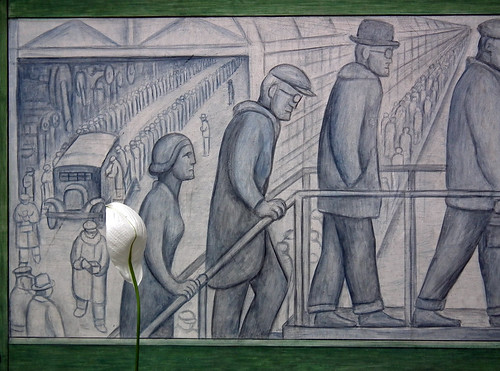
The fresco (mural) "Detroit Industry" was painted by Diego Rivera between 1932 and 1933; we Mexicans know it from our elementary school books (at least those of my school years) and its images are present in tens of illustrations about Mexican muralism. Its main theme is precisely the Detroit industry, which is none other than the automotive and related ones. Apparently it's Diego Rivera's the largest mural outside Mexico.

Just after one enters the museum the receptionists offer detailed information about the highlights of their permanent collection among which, of course, is "The Industry Of Detroit"; you receive a clear explanation of how to get to the room where the mural is, in the central hall of the museum, a privileged space due to its light and spaciousness.
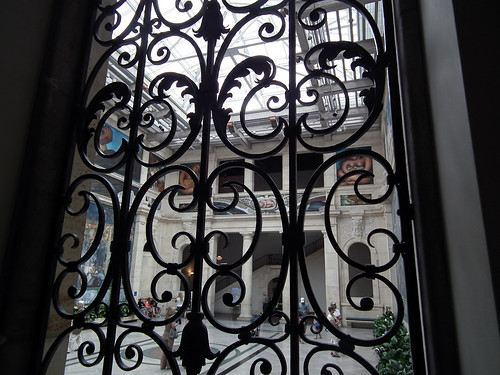
Diego Rivera's mural "Detroit Industry" at Detroit Institute of Arts (Detroit. 2012)
"Detroit Industry" A Diego Rivera's fresco at the Detroit Institute of Arts (Gustavo Thomas © 2012)

After what little I've read of the research that Renato González Mello has done on the esoteric part of Diego Rivera in his works in Mexico City (especially the mural in the central building of the minister of education, "La SEP"), I could look at this fresco in Detroit with a new idea in my head; at some other moment I would have contemplated it only aesthetically as a perhaps direct and propagandistic remnant of social movements of the last century (like socialism, class conflict, etc.) and, though it certainly is very influenced by that, the addition of an esoteric interpretation extends the enjoyment and learning from what is observed.  Then those images of curvy women, of plants and fruits, of earth, roots and seeds, and of course the positions of the characters and the colors used within the overall composition of the painting, acquire another dimension. Obviously I am not an expert and I will not delve deeper, but I can refer you to the latest research on the work of Diego Rivera by Dr. González Mello et al.
I share here my photos of the mural.   I hope you enjoy them.
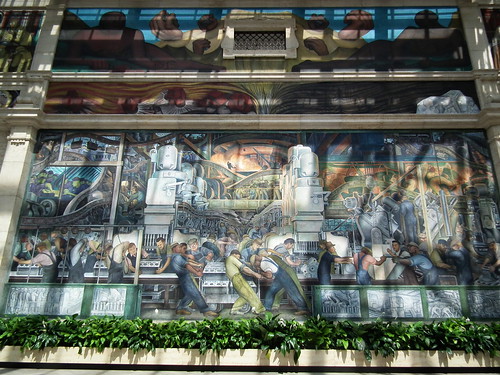
Diego Rivera's mural "Detroit Industry" at Detroit Institute of Arts (Detroit. 2012)
"Detroit Industry" A Diego Rivera's fresco at the Detroit Institute of Arts (Gustavo Thomas © 2012)

Diego Rivera's mural "Detroit Industry" at Detroit Institute of Arts (Detroit. 2012)
"Detroit Industry" A Diego Rivera's fresco at the Detroit Institute of Arts (Gustavo Thomas © 2012)

Diego Rivera's mural "Detroit Industry" at Detroit Institute of Arts (Detroit. 2012)
"Detroit Industry" A Diego Rivera's fresco at the Detroit Institute of Arts (Gustavo Thomas © 2012)


* I've already published in the Blog some photographs of Vincent van Gogh's painting The Diggers.

About "Detroit's destruction" maybe this note by the BBC about Detropia, a documentary, helps to understand the current situation in the city: http://www.bbc.co.uk/news/entertainment-arts-19578766 


Texts, photographs and videos in this Blog are all author's property, except when marked. All rights reserved by Gustavo Thomas. If you have any interest in using any text, photograph or video from this Blog, for commercial use or not, please contact Gustavo Thomas at gustavothomastheatre@gmail.com.



Saturday, August 18, 2012

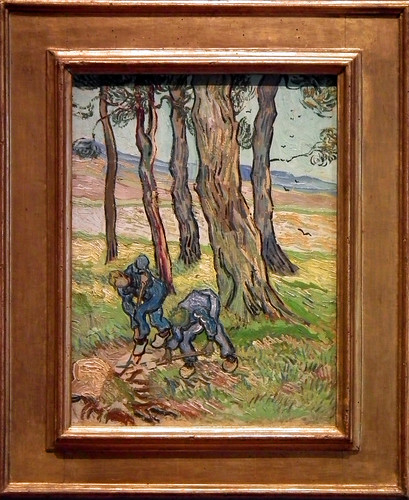
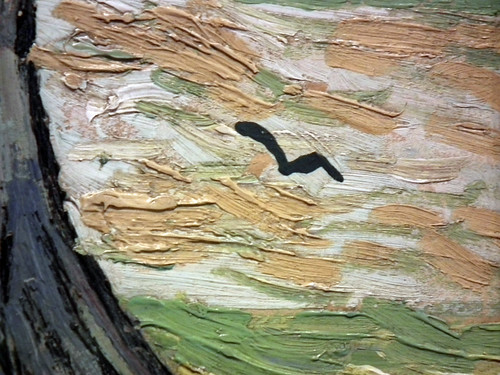
Details of Vincent van Gogh's "The Diggers". A painting at the Detroit Institute of Arts. (Detroit. 2012)

Vincent van Gogh's "The Diggers" at the Detroit Institute of Arts (Detroit. 2012)
"The Diggers" By Vincent van Gogh. Detroit Institute of Arts. (By Gustavo Thomas. 2012)

You know a master when you are able to study the details of his work. Well, here you are...

Detail of Vincent van Gogh's "The Diggers" at the Detroit Institute of Arts (Detroit. 2012)
Detail of "The Diggers" By Vincent van Gogh. Detroit Institute of Arts. (By Gustavo Thomas. 2012)
Detail of Vincent van Gogh's "The Diggers" at the Detroit Institute of Arts (Detroit. 2012)
Detail of "The Diggers" By Vincent van Gogh. Detroit Institute of Arts. (By Gustavo Thomas. 2012)
Detail of Vincent van Gogh's "The Diggers" at the Detroit Institute of Arts (Detroit. 2012)
Detail of "The Diggers" By Vincent van Gogh. Detroit Institute of Arts. (By Gustavo Thomas. 2012)


Texts, photographs and videos in this Blog are all author's property, except when marked. All rights reserved by Gustavo Thomas. If you have any interest in using any text, photograph or video from this Blog, for commercial use or not, please contact Gustavo Thomas at gustavothomastheatre@gmail.com.
Thursday, December 9, 2010

An Obituary from the Empire... The Death of Riszard Cieslak according to The New York Times.


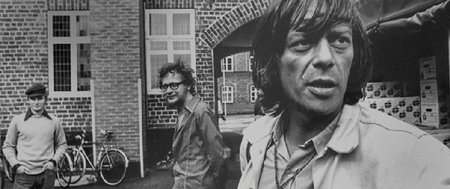
left to right: Stanisław Ścierski, Jerzy Grotowski, Ryszard Cieślak; Holstebro, Denmark, 1970
photo: Andrzej Paluchiewicz


While trying to write a poem to Ryszard Cieslak, and doing some research about him, I found the The New York Time's obituary dedicated to Cieslak's death in June 16th,1990. You have to read the paragraph about the theater critics' opinion of him...


"Ryszard Cieslak, Actor, 53

Published: June 16, 1990

Ryszard Cieslak, an actor and a central figure in the Polish Laboratory Theater, died Thursday at the Burzynski Research Institute in Houston. He was 53 years old and lived in Manhattan.Dr. Stan Burzynski said that Mr. Cieslak had been admitted to the institute June 5, and that he died of lung cancer.Mr. Cieslak joined the Laboratory Theater, which Jerzy Grotowski founded in 1959 in Poland as a vehicle for experimental drama, in 1962. After its dissolution in 1977, Mr. Cieslak and Mr. Grotowski worked together in numerous dramatic projects.Theater critics cited Mr. Cieslak in 1969 as Off Broadway's most outstanding creator and the actor with the greatest promise.For the last four years, Mr. Cieslak taught acting to advanced students at the Tisch School of the Arts at New York University."


"in 1969 as off Broadway's most oustanding creator and the actor with the greatest promise" ... Those God-like critics were very grateful with Cieslak in 1969, but there is nothing concrete about a final valorization of his work in 1990.

Even when The New York Times is one of my favorite newspapers it doesn't mean I see this journal as outside the American empire's media world, and it is a big part of it, of course. This newspaper has been one of the main promoters of American realism and a Broadway style of doing theatre since its beginning, almost erasing (in its own version of performing arts history) any other kind of style or exploration coming from other parts of the world.


Saturday, May 2, 2009

Javanese Rod Puppets Collection at Asian Art Museum of San Francisco.


I took some photographs of the Javanese rod puppets (wayang golek) collection in exhibition at San Francisco Asian Art Museum in February, this 2009.

It seems the museum has dozens of these puppets but only a few are in exhibition. (1)

This is what the Museum's caption says about this kind of puppet theatre:


"Rod Puppets (wayang golek) of Java, Indonesia.


Indonesian Puppet Traditions


Amond the performing arts traditions of Indonesia, the most familiar to outsiders is the shadow puppet theater (wayang kulit).


Another important, though less well known, Indonesian performing arts is the theater of three-dimensional rod puppets (wayang golek). Unlike the shadow puppet theater, which has been nurtured in the aristocratic courts of Central java,wayang golek has been a popular, nonaristocratic tradition. It has flourished along the northern coast and western Java.


The puppet theater of Indonesia is not a children's theater, although children are often fascinated by it. Its stories are derived from the great Indian epics the ramayana and the Mahabharata (which are familiar in varying degrees in much of Southeast asia), as well as from other literary works ad incidents of history. The stories come from both Hindu and Islamic contexts.


Performances


A sole puppeteer not only manipulates all the puppet characters but also speaks for all of them, at the same time creating sound effects and directing the accompanying musical ensemble.
Performances continue for many hours. They must not be interrupted for fear of causing disruptions in the everyday world, which the puppet world is seen as paralleling. because the puppet theater, in addition to portraying furious battles and raucous comedy,examines the most serious issues facing society, amaster puppeteer is thought to posees great spiritual power.

The Puppets


The puppets, carved of wood, are brightly painted, and dressed in clothing and jewelry of batik and other fabrics, leather, sequins, and beads. Their hands can be turned by the pupeteer, and their long arms are hinged at shoulders, elbows, and wrists, allowing the puppeteer to use the rods attached to the hands to create a wide range of expressive gestures.


The facial features, colors, and costumes of the puppets identify the characters they represent, from beautiful princesses to noble warriors to scheming courtiers to mischievous clowns to exalted gods. The Indonesian audience usually knows the stories presented, can recognize the puppet characters, and is aware of their powers and weaknesses as well as the quirks of their personalities. The characters are so familiar that you can say "our neighbor is acting like Bhima," and everyone will know what you mean.
"


There are some videos in Youtube showing these theatre in performances: http://www.youtube.com/watch?v=4u-0Pa3fGF4


(1) Here is a link to the database of the Asian Art Museum, with photographs and information about any of its puppets collection: http://67.52.109.59/code/emuseum.asp?style=text&currentrecord=1&page=search&profile=objects&searchdesc=Puppets&quicksearch=Puppets&newvalues=1&newstyle=browse

Thursday, April 23, 2009

Concurso Hispanoamericano de Dramaturgia


I received an e-mail from Luis Alejandro Simon, director of the Club de Teatro "Barbara Simon" informing that, to celebrate the 50th anniversary of the Inter-American Development Bank (the institution that owns the club) promotes a drama contest in Spanish and English. Here is the text that he sent to me (in Spanish the original):


El Club de Teatro "Bárbara Simon" de la Asociación de Empleados del Banco Interamericano de Desarrollo (BID) festeja el Cincuenta Aniversario de esta Institución con el lanzamiento del "Concurso Hispanoamericano de Dramaturgia".

Este evento reparte entre sus ganadores, US$ 17.000 en efectivo más un impactante paquete de premios especiales.
Les invito a leer las bases del concurso en nuestra página web:
www.teatrobid.org

Adjunto al presente el afiche del Concurso, agradeciendo sinceramente su difusión.
Su gestión será de vital importancia para acercar esta convocatoria a los dramaturgos chinos o a los dramaturgos hispanoamericanos que viven en China. Esperamos que esta propuesta sirva de estímulo para abrirles el camino a una carrera internacional y les brinde nuevas oportunidades de desarrollo artístico.

( ... )

Le agradezco por anticipado ayudarnos a difundir nuestro Concurso en China.

Atentamente,
Luis Alejandro Simón
Director General
Club de Teatro"Bárbara Simon"

Asociación de Empleados del BID

1300 New York Ave. N.W Washington, D.C 20577 - USA "


I visited the site, www.teatrobid.org (everyone can access to it), copied part of the main text and posted it here (also in Spanish the original):

Concurso Hispanoamericano de Dramaturgia

En Celebración del
Cincuenta Aniversario del BID

El Club de Teatro “Bárbara Simon” de la Asociación de Empleados del Banco Interamericano de Desarrollo (BID), convoca a los autores teatrales a participar del Concurso Hispanoamericano de Dramaturgia en celebración del Cincuenta Aniversario del BID. La Asociación de Empleados del BID es un organismo representativo de los empleados, que entre otras finalidades, promueve el bienestar de los empleados a través de actividades sociales, culturales, de deportes o recreacionales.

Los dramaturgos contemporáneos hispanoamericanos tienen por delante un arduo camino para convencer a los teatros de la posibilidad de estrenar sus piezas teatrales y es aquí donde los concursos literarios desempeñan un papel fundamental: avalar la calidad de un dramaturgo y abrir así una oportunidad que eventualmente impulsará su carrera artística. El público tendrá entonces la última palabra y decidirá el destino de su obra, mediante su aceptación o su rechazo. Pero para llegar a abrir el telón, los concursos constituyen en nuestros días una gran puerta que conduce a un dramaturgo al escenario.

Para participar de este concurso los autores podrán escoger una de las siguientes categorías:

  1. Gran Comedia Hispanoamericana para un mínimo de siete personajes (Escrita en español)
  2. Hispanos en USA, but sin estereotipos (Escrita en español, inglés o spanglish).
  3. Teatro Infantil (Escrita en español)

Podrán participar del Concurso los ciudadanos nativos o extranjeros que cuenten con más de cinco años de residencia comprobable en cualquiera de los países miembros del BID:

Alemania, Argentina, Austria, Bahamas, Barbados, Bélgica, Belice, Bolivia, Brasil, Canadá, Chile, Colombia, Costa Rica, Croacia, Dinamarca, Ecuador, El Salvador, Eslovenia, España, Estados Unidos, Finlandia, Francia, Guatemala, Guyana, Haití, Holanda, Honduras, Israel, Italia, Jamaica, Japón, México, Nicaragua, Noruega, Panamá, Paraguay, Perú, Portugal, Reino Unido, República de Corea, República Dominicana, República Popular de China, Suecia, Suiza, Suriname, Trinidad y Tobago, Uruguay y Venezuela.

Las obras presentadas no tendrán limitaciones de propuestas estéticas y deberán ser originales (no adaptaciones), inéditas, no estrenadas, no haber sido premiadas anteriormente, ni escenificadas con anterioridad en ningún país, ni tampoco podrán estar participando en procesos de selección de ningún otro concurso durante el periodo de tiempo comprendido desde el comienzo de la fase de selección hasta el fallo de premiación de este concurso.

El jurado seleccionará 4 ganadores por categoría otorgando premios por la cantidad total de US$ 17.000 en efectivo que se suman al siguiente paquete de premios especiales:

  1. El Club de Teatro “Bárbara Simon” representará la obra ganadora de la categoría “Gran Comedia Hispanoamericana para un mínimo de siete personajes” en el Auditorio Enrique Iglesias (EVI) del Banco Interamericano de Desarrollo (BID) en Washington, D.C., durante su temporada teatral 2010/2011.
  2. El ganador del primer premio de la categoría “Gran Comedia Hispanoamericana para un mínimo de siete personajes” viajará a Washington, D.C. con los gastos de viaje y alojamiento pagados para estar presente en el estreno mundial de su obra.
  3. El Club de Teatro “Bárbara Simon” publicará en 2011 una selección de las 10 mejores obras del Concurso (ver detalles en Bases). La publicación será posteriormente distribuida a teatros y bibliotecas de Hispanoamérica que determine el Club de Teatro.
  4. El Thalia Spanish Theatre (Nueva York) representará la obra ganadora de la categoría "Hispanos en USA but sin estereotipos" en Estreno Mundial en producción bilingüe durante su temporada teatral 2010/2011.
  5. La Sociedad Educativa de las Artes Inc., SEA (Nueva York) seleccionará una de las obras ganadoras de la categoría “Teatro Infantil” para ser representada durante su temporada teatral 2010/2011.
  6. El Teatro GALA, a través de su programa infantil GALITA (Washington, D.C.) seleccionará una de las obras ganadoras de la categoría “Teatro Infantil” para ser representada durante su temporada teatral 2010/2011.

La convocatoria se abrirá el 1 de abril de 2009 y concluirá el 1 de septiembre de 2009.

Las obras deberán enviarse, por duplicado a:

Luis Simón
Director Ejecutivo
Concurso Hispanoamericano de Dramaturgia
Asociación de Empleados del BID
1350 New York Ave. N.W – Stop B-0670
Washington D.C. – 20577 -USA

Auspician este concurso: Banco Interamericano de Desarrollo (BID); Asociación de Empleados del BID; Asociación de Familias del BID; Centro Español de Washington, D.C.; Embajada de España en Estados Unidos; Embajada de Venezuela en Estados Unidos; Embajada de Uruguay en Estados Unidos; Telemundo; Centro Dramático Nacional (Ministerio de Cultura, España); Thalia Spanish Theatre; Teatro GALA y la Sociedad Educativa de las Artes Inc. (SEA) y el Ministerio de Cultura de Guatemala.
Solo serán aceptadas aquellas obras que cumplan todos los requisitos detallados en las bases del Concurso.

Bases:
Documento en Español (PDF)

Convocatoria:
Abr 1 - Sep 1

Enviar Obras a:
Luis Simón
Director Ejecutivo
Concurso Hispanoamericano de Dramaturgia
Asociación de Empleados del BID
1350 New York Ave NW
Stop B-0670
Washington, DC 20577
USA

Consultas:
Ana Nuchowich
Productora General
Correo: teatrobid@iadb.org
No se aceptarán consultas telefónicas de ningún tipo, ni se recibirán obras enviadas por correo electrónico.


If you are interested in using any text, image or video from this Blog, please contact the author writing your e-mail and information in comments. (comments are private)
Gustavo Thomas. Get yours at bighugelabs.com